
Typhoon Uwan Threatens Cagayan Valley: Preparations Intensify as Super Typhoon Looms

Breaking: Super Typhoon Uwan Threatens Cagayan Valley
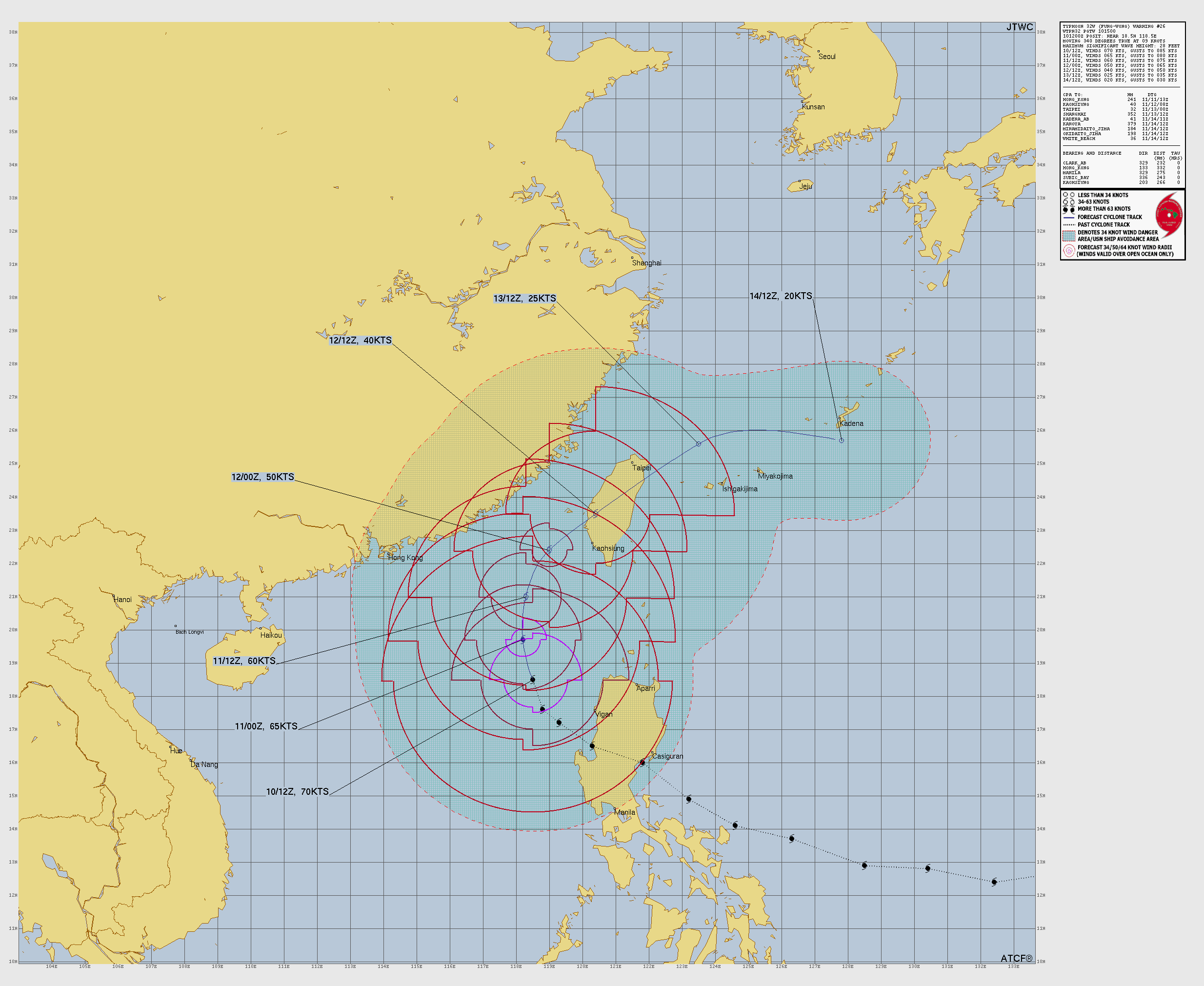
November 8, 2025, TUGUEGARAO CITY — As darkness falls across Northern Luzon tonight, millions brace for what PAGASA warns could be the most powerful storm of 2025. Typhoon Uwan (international name: Fung-wong) entered Philippine waters at 10:00 PM on November 7, packing winds of 120 kph with gusts reaching 150 kph. By Sunday morning, it may intensify into a super typhoon with catastrophic winds exceeding 185 kph1.
For Cagayan Valley—still haunted by memories of Typhoon Ulysses’s devastating floods in 2020—Uwan’s approach triggers both fear and fierce determination. This is not just another storm warning. This is a test of whether the region has learned from its tragic past.
The Approaching Monster: Uwan’s Deadly Path
Current Status and Trajectory
According to PAGASA’s latest bulletin, Typhoon Uwan was located 990 kilometers east of Central Luzon as of 8:00 PM, November 72. The storm is moving west-northwest at 20 kph, directly toward Northern Luzon. Weather specialist Benison Estareja confirmed the typhoon’s rapid intensification, with gustiness increasing from 115 kph to 125 kph in just hours3.
Most alarming is PAGASA’s projection that Uwan will undergo rapid intensification, potentially reaching super typhoon status by Saturday evening or Sunday morning4. If this occurs, Signal No. 5—the highest wind warning—will be raised for the first time in 2025.
Expected Impact on Cagayan Valley
PAGASA has identified two potential landfall scenarios5. The primary track targets southern Isabela or northern Aurora provinces, while a northern deviation could bring the typhoon directly into northeastern Cagayan and extreme Northern Luzon. Either path spells disaster for Cagayan Valley, with the region facing torrential rainfall exceeding 200mm in Cagayan, Isabela, Quirino, and Nueva Vizcaya6. Life-threatening storm surges may exceed 3 meters along coastal areas7. Catastrophic winds could potentially reach 220 kph if super typhoon status is achieved, while widespread flooding threatens low-lying areas and river basins throughout the valley.
Cagayan Valley’s Nightmare Returns: Lessons from Ulysses
The specter of Typhoon Ulysses (Vamco) looms large over current preparations. In November 2020, Ulysses brought Cagayan Valley its worst flooding in four decades8. The statistics remain staggering: 24 deaths in Cagayan Valley alone9, with 151,600 families comprising 583,493 individuals affected10. Total damage reached ₱20.2 billion nationwide11. Some areas disappeared under 4.5 meters of water12, leaving thousands trapped on rooftops for three days awaiting rescue13.
The Cagayan River rose to a critical 13 meters at Buntun Bridge, flooding nearby barangays up to roof level. The catastrophe was amplified when Magat Dam released 6,000 cubic meters of water per second through its seven gates to prevent dam failure14.
Why Cagayan Valley Floods: A Perfect Storm of Factors
Experts have identified Cagayan Valley as the Philippines’ most flood-prone region15. The vulnerability stems from multiple converging factors. Geographic positioning curses the valley to act as a natural catch basin for all of Northern Luzon’s water. Magat Dam provides only limited control, managing just 15% of the river basin’s total water storage capacity16. Deforestation from illegal logging and slash-and-burn farming dramatically increases runoff speeds. Decades of siltation have reduced river capacity by filling channels with sediment17. Climate change delivers the final blow, producing more intense typhoons with unprecedented rainfall volumes that overwhelm every defensive measure.
Current Preparations: Racing Against Time
Government Response
The Office of Civil Defense (OCD) has activated comprehensive preparations across Northern Luzon. Regional Director Albert Mogol emphasized the critical need for effective early warning systems: “We need an effective and efficient early warning system so there is time to evacuate those in low-lying areas, particularly in Cagayan Valley”18.
Current government actions span preemptive evacuations with mandatory orders for coastal and riverside communities, resource positioning with 3,700 rescue personnel on standby19, medical preparations including hospitals securing backup power and emergency supplies, and communication systems deployment with satellite phones distributed to isolated municipalities.
PAGASA’s Warning System
As of November 8, Tropical Cyclone Wind Signal No. 1 has been raised in 21 areas across Luzon and Visayas20. PAGASA warns that Signal No. 5 may be raised if Uwan reaches super typhoon strength. Storm surge warnings are expected by Saturday, with coastal communities urged to evacuate immediately.
Magat Dam Protocol
Learning from Ulysses, Magat Dam operators have activated enhanced protocols21. The strategy begins with gradual pre-emptive water release starting 72 hours before typhoon arrival. Real-time coordination links dam operators with downstream communities. Public announcements occur every 3 hours detailing current water discharge rates. Sirens and warning systems activate along the entire Magat River corridor to alert residents of rising water levels.
However, the dam faces a cruel dilemma: release water early and risk flooding, or hold back and risk catastrophic dam failure. With the reservoir’s capacity reduced by 40% due to siltation, the margin for error has narrowed dangerously22.
Critical Preparations for Cagayan Valley Residents
Immediate Actions (Next 24 Hours)
Monitor official updates constantly, checking PAGASA bulletins every 3 hours and following local government announcements. Prepare emergency kits containing 3-day food and water supplies per person, flashlights with batteries, a portable radio, first aid kit with medications, important documents sealed in waterproof containers, and cash since ATMs may not function post-typhoon. Secure your property by moving valuables to upper floors, clearing drainage systems, reinforcing windows and doors, and tying down or storing all outdoor equipment. Charge all electronic devices including phones, power banks, and emergency lights. Fill every available container with clean water as the supply may be cut or contaminated.
Evacuation Decisions
Evacuate immediately if you are in coastal areas vulnerable to storm surge, areas within 100 meters of rivers, landslide-prone slopes, flood-prone barangays identified by local government, or structures not built to withstand strong winds. Contact your barangay captain or call the Cagayan Valley Regional Disaster Risk Reduction and Management Office at (078) 844-1630 for evacuation center information.
During the Typhoon
Stay indoors and away from windows throughout the storm. Monitor water levels continuously if you live near rivers. Be prepared to move immediately to higher floors or even roofs if flooding occurs. Never attempt to cross flooded areas regardless of how shallow they appear. If you must evacuate during the storm itself, use only designated rescue hotlines rather than attempting self-evacuation.
Long-term Solutions: Breaking the Cycle
While immediate survival is paramount, Cagayan Valley’s recurring flood disasters demand systemic solutions.
Infrastructure Developments
The Department of Public Works and Highways (DPWH) has proposed constructing 5-6 additional dams along the Cagayan River23. Two will focus on flood control, while four will serve multiple purposes including irrigation and power generation. This ₱50 billion project could finally give the valley adequate flood control capacity.
Early Warning Systems
Enhanced monitoring systems are being installed throughout the region. Automated rain gauges deployed in upper watersheds measure precipitation in real-time. River level sensors equipped with SMS alerts notify authorities and residents when critical thresholds are reached. Community-based warning networks leverage local knowledge and social connections to spread alerts rapidly. Integration with national weather forecasting systems ensures coordinated response across all government levels.
Watershed Rehabilitation
Reforestation programs aim to restore the region’s natural flood defenses. The National Greening Program targets planting 1 million trees annually in critical watershed areas, though illegal logging remains a persistent challenge.
The Human Story: Courage Amid Crisis
Behind the statistics are real families facing an all-too-familiar terror. In Barangay Buntun, 68-year-old Aling Rosa recalls Typhoon Ulysses: “The water rose so fast, we barely had time to climb to our roof. We stayed there for two days, no food, just praying for rescue.”
Now, as Uwan approaches, she’s taking no chances. “We’re evacuating early this time. I’d rather sleep uncomfortably in an evacuation center than risk my grandchildren’s lives.”
This determination echoes across Cagayan Valley. Communities have organized themselves into disaster response teams. Youth volunteers coordinate social media rescue requests. Farmers have moved livestock to higher ground days in advance.
Critical Hours Ahead
The next 72 hours will determine whether Cagayan Valley faces another historic catastrophe or successfully weathers the storm through preparedness and resilience. PAGASA will issue updates every three hours, with the next bulletin at 11:00 PM tonight. Key monitoring points include Saturday morning when rapid intensification is expected, Sunday dawn when the potential landfall window begins, and Monday through Tuesday marking the peak impact period for Northern Luzon.
Stay Connected, Stay Alive
Emergency hotlines include the National Emergency Hotline at 911, Cagayan PDRRMO at (078) 844-1630, Isabela PDRRMO at (078) 323-0116, Philippine Red Cross at 143, and PAGASA at (02) 8927-1541. Official information sources include PAGASA at pagasa.dost.gov.ph, NDRRMC at ndrrmc.gov.ph, and Cagayan Valley Regional Updates at Facebook.com/OCDRegion2.
As Typhoon Uwan bears down on Cagayan Valley, the region stands at a crossroads between tragedy and triumph. The lessons of Ulysses have been learned, preparations are underway, but nature’s fury remains unpredictable. What is certain is that the spirit of bayanihan—community helping community—will once again be tested.
Stay safe, Cagayan Valley. The nation watches and prays with you.
References
- Manila Bulletin. (2025, November 5). “Cyclone outside PAR may become super typhoon before entry this weekend, to be named ‘Uwan’ — PAGASA.” Retrieved from: mb.com.ph/2025/11/05/cyclone-outside-par-may-become-super-typhoon
- PAGASA. (2025, November 7). “Tropical Cyclone Bulletin Nr. 5 – Typhoon UWAN (FUNG-WONG).” Retrieved from: pubfiles.pagasa.dost.gov.ph/tamss/weather/bulletin_uwan.pdf
- Rappler. (2025, November 7). “PAGASA: Prepare now for ‘very intense, enormous’ Fung-wong or Uwan.” Retrieved from: rappler.com/philippines/weather/severe-tropical-storm-fung-wong
- Inquirer.net. (2025, November 7). “Uwan, still outside PAR, is now a typhoon, says Pagasa.” Retrieved from: newsinfo.inquirer.net/2136174
- Rappler. (2025, November 5). “Future Uwan, a potential super typhoon, could hit Luzon.” Retrieved from: rappler.com/philippines/weather/tropical-depression-pre-uwan
- U.S. Embassy in the Philippines. (2025, November 7). “Weather Alert: Preparing for Typhoon Uwan (Fung-wong).” Retrieved from: ph.usembassy.gov/weather-alert-preparing-for-typhoon-uwan
- Inquirer.net. (2025, November 7). “Batanes to Bohol: ‘Uwan’ seen to impact most of PH.” Retrieved from: newsinfo.inquirer.net/2136213
- Inquirer.net. (2020, November 16). “What caused Cagayan Valley’s worst flood in 40 years?” Retrieved from: newsinfo.inquirer.net/1360770
- ReliefWeb. (2020, November 24). “Philippines: Typhoon Vamco (Ulysses) Cagayan Valley Region Impact and Response.” Retrieved from: reliefweb.int/report/philippines
- Inquirer.net. (2020, November 17). “BY THE NUMBERS: The impact of Typhoon Ulysses in Cagayan Valley.” Retrieved from: newsinfo.inquirer.net/1361318
- Wikipedia. (2020). “Typhoon Vamco.” Retrieved from: en.wikipedia.org/wiki/Typhoon_Vamco
- Guy Carpenter. (2020, November). “CAT-i Bulletin: Typhoon Vamco (Ulysses).” Retrieved from: guycarp.com/insights/2020/11/cat-i-bulletin-typhoon-vamco
- CDRC. (2020, November 14). “Typhoon Ulysses Situation Report #6.” Retrieved from: cdrc-phil.com/typhoon-ulysses-situation-report
- NIA. (2020, November). “NIA reaffirms that recent flooding in Cagayan Valley is not wholly attributed to Magat Dam.” Retrieved from: nia.gov.ph/content
- NASA Earth Observatory. (2020, November). “Flooding in Northern Luzon.” Retrieved from: earthobservatory.nasa.gov/images/147554
- Philippine News Agency. (2020, November 17). “Water release prevented bigger catastrophe: Magat Dam exec.” Retrieved from: pna.gov.ph/articles/1122013
- Manila Times. (2025, June 7). “ISU, SNAP-Magat enhance Magat Dam’s resilience.” Retrieved from: manilatimes.net/2025/06/07/business
- ReliefWeb. (2020, November 16). “Philippines: Typhoon Vamco (Ulysses) Worst Flooding in Decades in the Cagayan Valley Region.” Retrieved from: reliefweb.int
- ReliefWeb. (2020, November 17). “Philippines: Super Typhoon Goni (Rolly) and Typhoon Vamco (Ulysses) – Flash Update No. 5.” Retrieved from: reliefweb.int
- Rappler. (2025, November 7). “Uwan strengthens into typhoon, enters PAR.” Retrieved from: rappler.com/philippines/weather/typhoon-uwan-update
- NIA-MARIIS. “The Magat Dam Protocol on Dam Discharge and Flood Warning Operation.” Retrieved from: mariis.nia.gov.ph/?q=page/magat-dam-protocol
- Wikipedia. “Magat Dam.” Retrieved from: en.wikipedia.org/wiki/Magat_Dam
- GMA Network. (2020, November). “DPWH plans to build 6 dams along Cagayan River for flood control.” Retrieved from: gmanetwork.com/news/topstories/regions/765596
This article will be updated as new information becomes available. Last updated: November 8, 2025, 8:00 PM