
Computer Engineering Drafting and Design
-
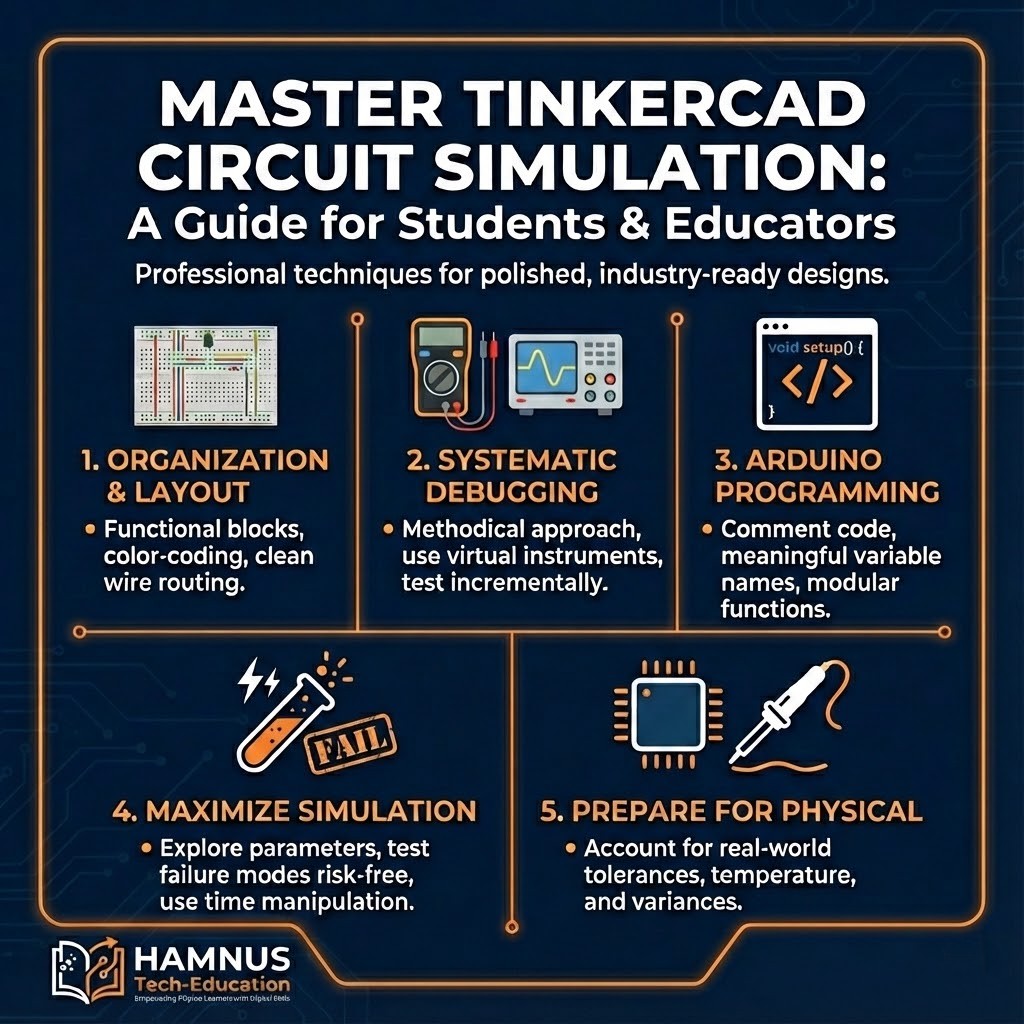
Best Practices for Using TinkerCAD in Electronics Projects
A Comprehensive Guide for Computer Engineering Students and Educators – Master circuit simulation with professional techniques. TinkerCAD is a free,...
-

Understanding PCBs and Arduino Applications
1. PCB Basics 2. PCB Manufacturing Processes 3. PCB Design Considerations 4. Advanced PCB Concepts 5. Arduino Basics 6. Practical...
-
Fundamentals and Principles of Academic and Scientific Research: A Comprehensive Overview
The evaluation of research papers encompasses a comprehensive approach that delves into various aspects of scholarly work. Key to this...
-
Comprehensive Knowledge Dumps and Trivias for Ender 3 3D Printing and TinkerCAD Design Optimization (Part )
The Ender 3 print bed temperature is crucial for ensuring that PLA filament adheres properly during the printing process. The...
-

Advanced Arduino Sensor Applications
1. Introduction to Arduino Sensors: 2. Selection of Appropriate Sensors: 3. Arduino Libraries and Communication Protocols: 4. Specialized Arduino Applications:...
-
Advanced Flowcharting, Circuit Simulation, and PCB Design
1. Flowcharting Essentials 2. Circuit Simulation Tools & Techniques 3. Computational Complexity & Design 4. PCB Design & Layout 5....
-
Introduction to Electronic Design and Simulation Tools
1. Overview of Software Tools 2. Unique Features and Characteristics 3. Standardization and Community Support 4. Closing Thoughts The world...
-
Introduction to Standards and Abbreviations
1. Organizations and Standards 2. Computer Engineering Abbreviations 3. Electronic Components in Schematics In the realm of schematics, electronic components...
-
Introduction to Electronic Schematic Symbols
1. Schematic Diagrams 2. Common Symbols in Schematic Diagrams 3. Overview Understanding the symbols used in schematic diagrams is essential...
-
Introduction to Diagrammatic Representations: Block Diagrams and Flowcharts
1. Block Diagrams 2. Flowcharts 3. Comparing Block Diagrams and Flowcharts 4. Practical Applications 5. Closing Thoughts Understanding the purpose...
-
Rubric for Problem Pitch Presentation
Criteria Exemplary (5) Proficient (4) Basic (3) Below Basic (2) Unsatisfactory (1) Clarity of Problem Statement Problem is presented clearly,...
-
“5 Whys” Laboratory Activity for System Creation in Computer Engineering
Objective: To guide Computer Engineering students in determining the type of system to create by applying the “5 Whys” technique....